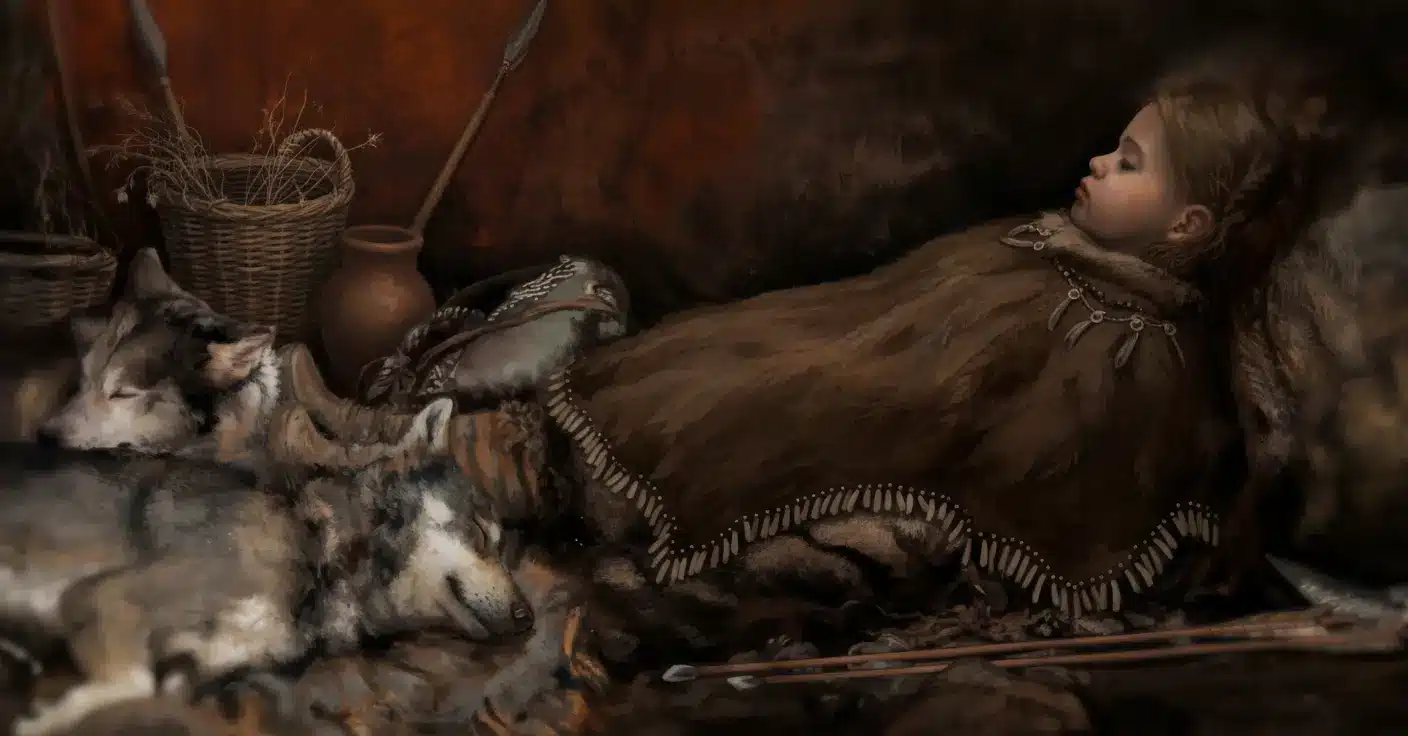
In the shadowy depths of a stone age Finnish forest, beneath a stony, sandy path, archaeologists recently uncovered more than just dust and the passage of time. What emerged is a poignant, mysterious glimpse into the life—and death—of a child from some 9,500 years ago, wrapped in an enigmatic tapestry of feathers, fur, and possibly canine companionship.
A Grave Hidden in Time
The story begins in the southeast of Finland, near Outokumpu, at the Majoonsuo site—first uncovered back in 1991. Stone age populations had a penchant for burying their dead in shallow graves dug directly into the earth, and this child’s final resting place was no exception. The grave, discovered under a rocky road in a forest, looked almost lost to history until 2018, when researchers grew concerned about its partial exposure—and possible destruction.
With little more than fragments left, it might have seemed an impossible task to learn anything. Yet, these traces soon told an astonishing tale. What survived? Just a handful of tiny teeth. But even teeth hold secrets. After careful study, archaeologists pinpointed that the child was between three and ten years old at death, dating to the Mesolithic period—around 7,500 BCE.
Clues from the Earth: Feathers, Fur, and Flint
No dramatic skeleton or priceless artifact here; instead, scientists turned to the soil itself, remarkably well preserved beneath the grave. Gathering an impressive 65 bags’ worth of samples, each weighed and compared with soil from outside the grave, the team then peered beneath the microscope—and gasped. (Or at least, we like to imagine they did.)
- Roughly twenty tiny feather fragments—most from bird down—were discovered.
- Seven of those belonged to Anseriformes, the waterbird group that includes ducks and geese.
- One fragment matched the Falconidae family, known for falcons.
- Two quartz arrowheads suggested links to Mesolithic hunting tools.
How did the feathers get there? It’s anyone’s guess (modern archaeologists are, after all, used to mystery). Perhaps the child wore a feather-stuffed coat or parka. Or maybe they rested on a feathery bed—the ultimate comfort for a final journey. The Falconidae feather could point to arrow fletching (those trusty quartz arrowheads) or perhaps it adorned the grave as a final flourish.
The Mystery of the Canine Companion
The plot thickens with the discovery of several mammal hairs—fragile, battered by time, and just half a millimeter to nearly a centimeter long. Only three could be attributed with confidence: to a canid. Was it a dog? A wolf? In Finland’s Mesolithic fog, all answers remain possible. The hairs might be remnants of footwear or clothing made from canid fur—or, as the team speculates, a real animal companion (furry, loyal, and now lost in history) may have been placed at the child’s feet.
This wouldn’t be without precedent: Professor Kristiina Mannermaa of the University of Helsinki points to burials in Skateholm, Sweden, where the dearly departed were interred with dogs as far back as 7,000 years ago. While only hairs—and not a canine tooth or bone—remain here, the mere suggestion opens doors to Stone Age bonds and rituals.
As Professor Mannermaa notes, the discovery is sensational, despite the near-absence of the animal itself. The method proves that even after millennia, clues like fur and feathers can still be teased from Finland’s ancient earth.
A Glimpse into Stone Age Rituals
But the story doesn’t end with birds and beasts. The researchers also found:
- Additional small mammal hairs, possibly accidental inclusions from secondary sources.
- Three plant fibres, likely from willow or bramble, hinting at fishing nets, clothing ties, or simple cords—echoes of the Antrea fishing net, the only other Mesolithic find of its type in Finland.
What this all adds up to is a jigsaw puzzle: a child, perhaps swaddled in bird down or laid to rest on a bed of feathers; the possible pelt of a dog or wolf—maybe even the animal itself—by their side; fragments of everyday objects fashioned from plant fibers. Was it a down coat, a feather bed, shoes of wolf skin, or the comfort of a loyal canine? The jury remains resolutely out. Yet, each tiny relic offers vital new insight into the Stone Age’s funerary habits—how people prepared their loved ones for their journey beyond.
And so, as the slow, painstaking work continues, Professor Mannermaa shares the thrill of the hunt: “My heart really leapt when I found those tiny fragments of clothing and grave furnishings, especially in Finland where unburnt bones so often disappear to decay.” Each precious clue casts rare light onto an ancient world, illuminating how even in the frosty climes of Stone Age Finland, care and ritual shaped the final journey—for children and, maybe, for their faithful best friends.

John is a curious mind who loves to write about diverse topics. Passionate about sharing his thoughts and perspectives, he enjoys sparking conversations and encouraging discovery. For him, every subject is an invitation to discuss and learn.