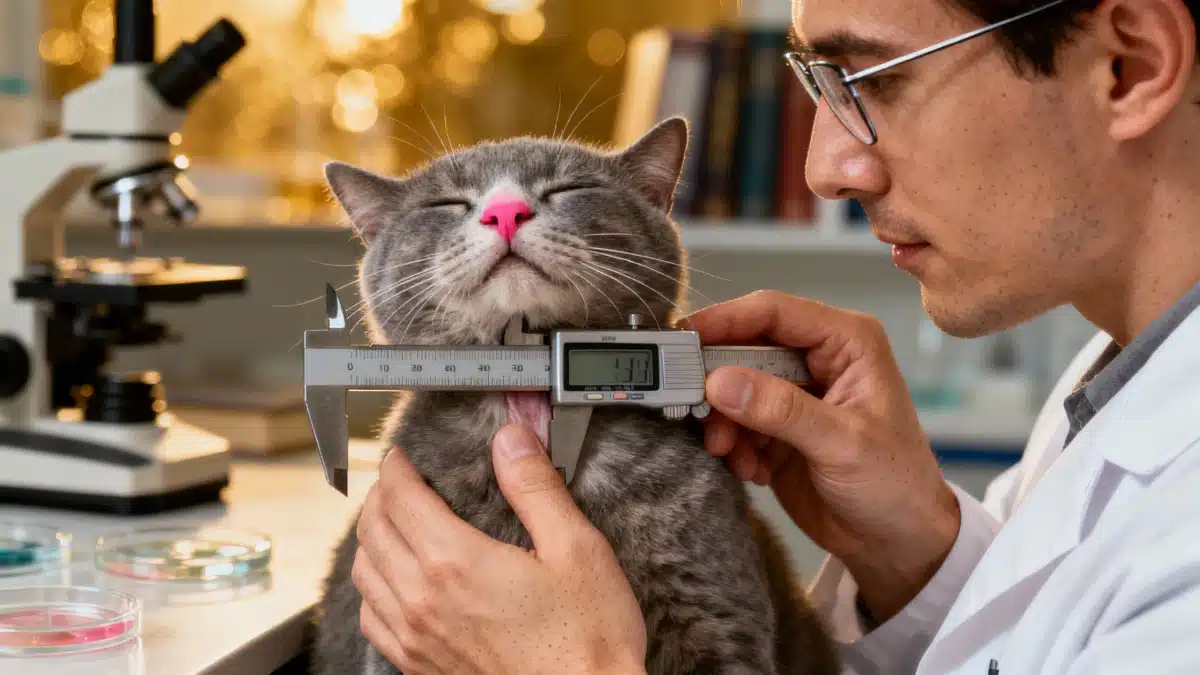
Why do cats purr? The answer, it turns out, might not be what you expect—or what cat memes have taught us. Brand new research is shaking the foundations of feline science, and brings us one step closer to understanding what lies beneath that comforting buzz in your lap. Ready to explore the mysterious mechanics behind the world’s most soothing soundtrack?
The Curious Case of Low-Frequency Felines
Purring has always been shrouded in mystery. Most humans—even the sciencey ones—have long believed cat purring is some exotic blend of brain signals and vocal gymnastics. Yet, a new study published on October 3 in Current Biology might just upend everything we thought we knew about cat chests and throats.
The study, led by Christian Herbst, a voice specialist at the University of Vienna, examines the anatomy and functioning of domestic cats in a way never done before. Historically, low-frequency vocalizations—typically ranging from 20 to 30 Hertz—were expected only from much larger animals, like elephants, with their impressively long vocal cords (and, let’s face it, a little less enthusiasm for face-rubbing your laptop). Cats, being considerably smaller, shouldn’t be able to hit these frequencies—or so we thought.
Padding the Facts: Unexpected Vocal Cushions
Here’s where the story gets plush—in every sense. Herbst’s team proposed a fresh hypothesis: What if cats have « pads » (think: squishy, fatty cushions) not only under their paws, but also tucked slyly into their vocal cords? According to the study, these pads appear to add an extra layer of fatty tissue, which enables the cords to vibrate at lower frequencies, producing that classic purr.
To put this to the test, the team investigated eight domestic cats that had sadly passed away from incurable diseases and had been euthanized in their final phase. Not ones to waste a scientific opportunity, the researchers pressed the vocal cords of these feline larynxes together and let a gentle stream of warm, humidified air flow through. The response? Each larynx produced a purr, all on its own—without any muscular contraction or brain involvement. Yes, you read that right: no feline yoga poses or meditation required.
That isn’t to say that muscle contractions or neural influences might not tweak the volume or intensity of a cat’s purr in a living, plotting kitty. Yet, the basic act of purring, it would seem, doesn’t need the brain to kick things into gear. This was, as you can imagine, a huge surprise for scientists who’d considered a purr to be a conscious or voluntary act. Move over, whiskers—there’s a new wonder in the vocal tract!
New Discoveries, Persistent Mysteries
A closer anatomical inspection didn’t just confirm the surprising lack of neural necessity. It uncovered actual, unusual masses of fibrous tissue—those hypothesized pads—embedded right in the vocal cords, whose function had previously escaped anyone’s notice. The main theory? These pads boost the density of the vocal cords, making them vibrate more slowly and enabling the generation of those sought-after low frequencies, regardless of a cat’s petite proportions.
But—and there’s always a « but » in science—before you start declaring your cat a quantum physicist in disguise, note that further research is very much needed. David Rice, a biomechanicist at Tulane University and an expert in the mechanics of purring, was quick to point out a caveat: What happens in a deceased animal’s larynx does not necessarily reflect what goes on in a living cat. Ideally, the study should be replicated in live animals to be certain.
Open Questions for the Feline Future
This research unlocks an exciting new door, but the room beyond is still rather dimly lit. If the brain isn’t steering the purring ship, then what exactly triggers it? Does it truly signal contentment or affection? (A pressing question for millions of hopeful cat parents, eager to believe in mutual love!) Is it a calming mechanism, or does it even help healing, as often theorized?
- How is purring triggered, if not directly by the brain?
- Should we always interpret purring as a sign of happiness?
- Does purring have health or healing benefits?
For now, these questions linger in the cozy, vibrating shadows. But next time your cat curls up and purrs against you, take a second to marvel at the fact that you’re part of a scientific mystery in progress—one that’s a little fluffier, and a little more intriguing, than you ever imagined.

John is a curious mind who loves to write about diverse topics. Passionate about sharing his thoughts and perspectives, he enjoys sparking conversations and encouraging discovery. For him, every subject is an invitation to discuss and learn.