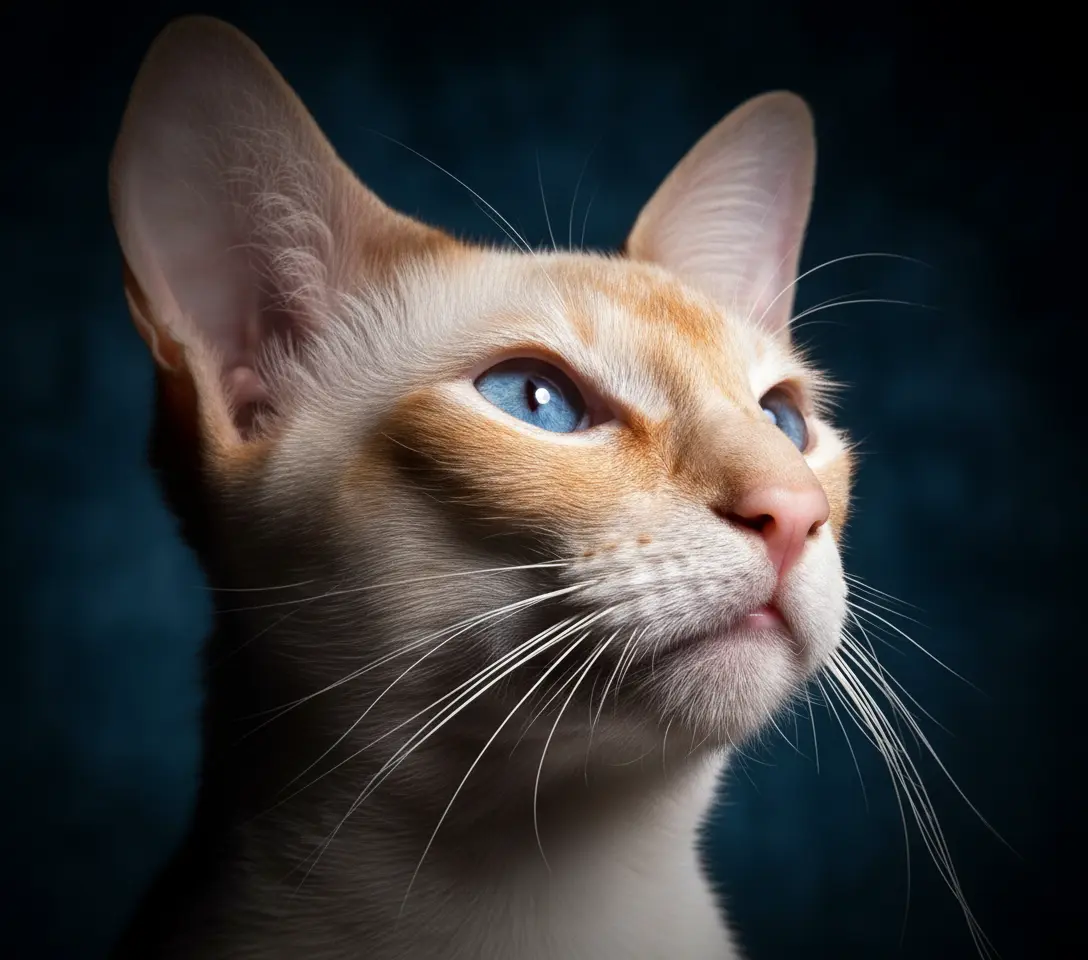
If you’ve ever watched a cat leap gracefully onto a windowsill in the dead of night, you might wonder: do they come equipped with built-in night vision goggles, ultrasonic hearing, or a secret sixth sense for food? Welcome to the mesmerizing world of feline senses, where light, sound, and scent take on a whole new meaning—and no, they still can’t judge your taste in music.
Entering the Twilight Zone: Cat Vision Unveiled
Cats, like humans, rely on the five classic senses: sight, hearing, smell, taste, and touch. But here’s the twist: their senses are not only sharper in many ways, they use the information differently. To get inside a cat’s head (proverbially—please don’t try it at home), you need to start with their eyes.
Like us, cats watch their world and, of course, scope out their next snack. But differences between their eyes and ours shape a life vastly different. For instance, a curious kitten sporting heterochromia—a condition in which its two eyes are different colors, like one blue, one green—experiences the world just the same as its peers. Color contrast may be striking, but it doesn’t affect feline vision.
The dazzling nocturnal jumps of our feline companions might fool us into imagining they see perfectly in pitch dark. Not quite. Cats do need a little bit of ambient light. While human night vision is—let’s be kind—questionable, cats see the dark as a playground. Thanks to millions of years of evolution, our furry friends are designed to hunt and move at dawn and dusk.
- The dome-shaped, large cornea in the cat’s eye gathers as much light as possible, focusing it onto the retina.
- Cats’ vertical-slit pupils can dilate up to 300 times more than in bright light, while humans peak at around fifteen times—talk about opening your eyes to the world.
- The eye’s inner surface boasts a layer called the tapetum lucidum, which bounces stray light back to the retina, making sure no photon goes to waste. That’s why your cat’s eyes glow in the dark!
- Cats outdo us in peripheral vision too—handy for avoiding that rogue curtain or spying on your approach.
But it’s not all superpowers—there’s a catch. Cat retinas pack fewer cones, the receptors responsible for color and sharp detail. So, the feline world is a little less vibrant, blurrier, and colors come in fewer shades. To see what a cat detects at sixty meters, a human would need to be at three hundred meters. Good thing cats are moved more by movement than by a detailed color palette.
Hearing: Tuning into the Feline Soundscape
Now, about those furry, triangular ears—think of them as parabolic microphones wrapped in velvet. The outer ear moves independently in all directions—forward, backward, sideways—helping cats pinpoint the source of a sound down to a few centimeters, up to a meter away, and in less than a blink of an eye (actually, less than six hundredths of a second!).
- Cats can rotate their ears up to 180 degrees.
- They distinguish extremely fine differences in sound, even just a tenth of a tone—way over the heads (and ears) of dogs and us.
- Impressively, in an experiment, researchers discovered cats preferred tunes featuring cat-familiar sounds, like purring and milk-suckling beats, over music designed for humans.
So, the next time someone tells you cats have no musical taste, you can tell them: only if you’re playing human music!
The Super Sniffer: Smell and the Jacobson Organ
While most of a cat’s senses mature over time, their sense of smell is fully firing straight from the womb. A newborn kitten uses its nose to find its way to a nipple and that all-important colostrum. Experts say cats’ sense of smell is about fourteen times more powerful than ours, courtesy of specialized tissue in their nose called the olfactory epithelium—which is five to ten times larger than in humans. Running the numbers, it’s up to 200 million odor-detecting cells versus our paltry five million.
But wait, there’s a bonus. Cats possess the Jacobson’s organ, nestled above the mouth and wired to the brain regions in charge of eating, mating, and social behavior. When something piques their interest, cats make a funny face—a slight mouth opening, upper lips curled—called the flehmen response. This guides air directly into the Jacobson’s organ, and with it, a world of olfactory information (think: feline social media update).
Tactile Talent: Whiskers Tell All
Last but absolutely not least, meet the vibrissae—whiskers to their friends. Longer and thicker than regular fur, each whisker sprouts from a follicle rich in nerves and blood vessels, giving cats fingertip-level sensitivity right on their faces (and sometimes legs!).
- Whiskers compensate for a cat’s less impressive close-up vision, allowing them to feel their way around obstacles.
- They detect the tiniest air movements—perfect for sensing nearby prey or avoiding that precarious teetering vase.
In the end, from whiskered snouts to twitching tails, cats live in a world tuned just so—a little softer, a bit blurrier, but far richer in movement, scent, and sound. Next time your feline critic sniffs at your playlist or vanishes into the night, remember: their world is simply not your world. Respect their mysteries—and resist the urge to test your own vision by leaping onto the kitchen counter at midnight.

John is a curious mind who loves to write about diverse topics. Passionate about sharing his thoughts and perspectives, he enjoys sparking conversations and encouraging discovery. For him, every subject is an invitation to discuss and learn.