Ever glanced at your once-white kitchen towels and felt a pang of nostalgia for their brighter days? If your linens look more « well-loved » than sparkling, don’t worry—you’re in good (albeit slightly stained) company. The secret to dazzling kitchen towels might just surprise you, and it’s more effective and eco-friendly than you’d ever expect.
The Overlooked Heroes of a Clean Kitchen
Day in, day out, our kitchen towels and dishcloths work harder than we give them credit for. Drying dishes, wiping down counters, and tackling mystery spills of questionable origin—they do it all. But despite their central role in our quest for a hygienic kitchen, these humble helpers are often neglected when it comes to proper care.
Here’s the kicker: with every wipe and pat dry, your towels come into contact with a range of substances that can encourage the growth of bacteria and germs. It’s not glamorous, but it’s the dirty truth. Sometimes, these textiles even become sneaky sources of cross-contamination, quietly transferring bacteria from surface to surface without us ever suspecting a thing. If you’ve ever been tempted to use the same towel for everything from drying dishes to mopping up a coffee spill—beware! This habit can increase the risk of passing bacteria around the kitchen, making food poisoning more of a possibility than any of us would like.
Baking Soda: The Old Standby… But There’s Something Better
Baking soda has long been the go-to hero for light cleaning. Sprinkle some here, sprinkle some there, and your cleaning woes are somewhat soothed. But when it comes to tougher cleaning challenges, like seriously dingy towels and stubborn stains, our old friend might just meet its match.
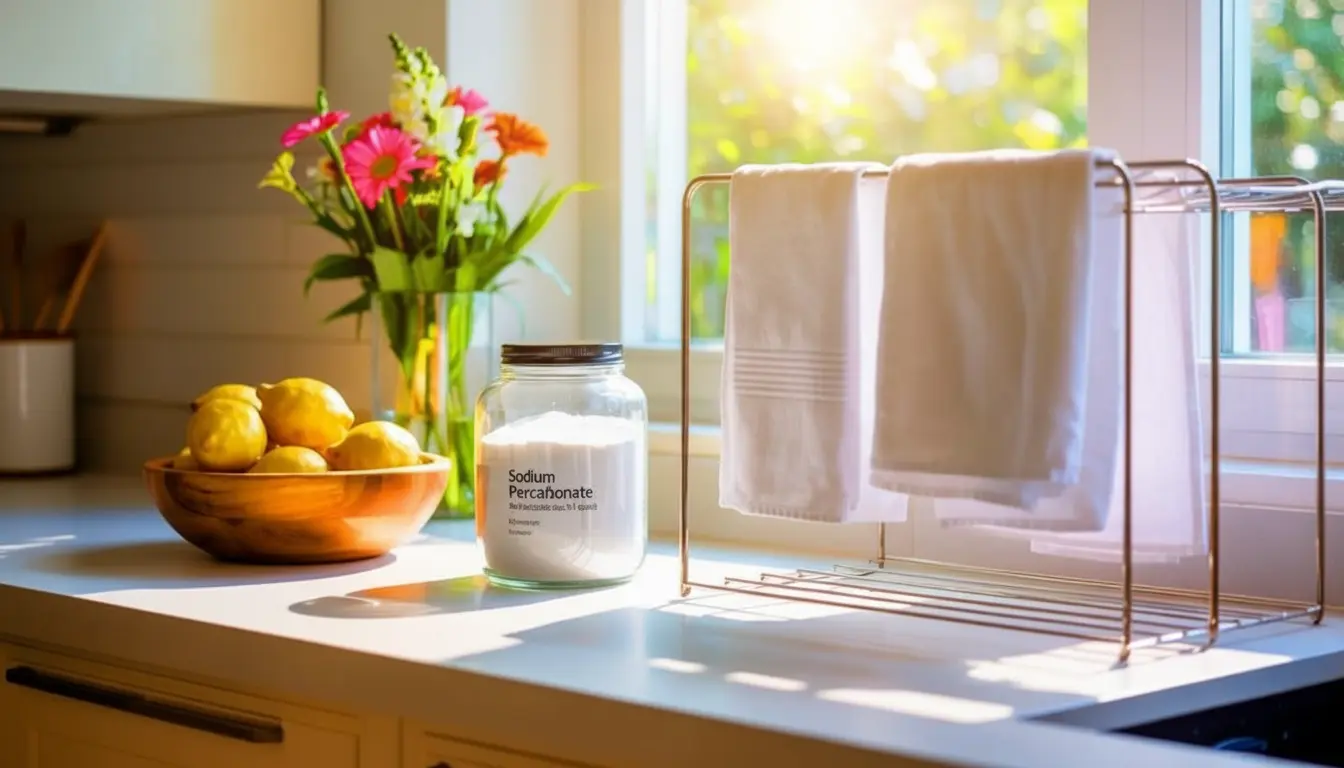
Enter the star of the cleaning show: sodium percarbonate. It comes onto the scene as a robust alternative for intensive cleaning needs. When mixed with hot water, this compound works its magic by releasing active oxygen, which then helps to both disinfect and whiten your textiles with impressive results.
Why Sodium Percarbonate Steals the Spotlight
Why should sodium percarbonate get your attention? For starters, it acts as an ecological bleach that stands in sharp contrast to harsh chlorine-based products. Safe for both the environment and your fabrics, sodium percarbonate packs a punch against organic stains including coffee, tea, wine, and sauces—not to mention those unpleasant odors that inevitably linger after a long day in the kitchen.
If you’re in search of natural alternatives, you’re in luck. Combining sodium percarbonate with baking soda delivers a thorough clean, without the downsides of aggressive chemical cleaners. It’s a dynamic duo that not only brings your towels back to a bright white, but also supports a healthier kitchen environment. That means you can reclaim those brilliant whites without sacrificing your commitment to clean living.
- Efficacy: Particularly effective against organic stains and lingering smells
- Eco-friendliness: All the whitening and disinfecting power, none of the guilt
- Fabric-safe: Tough on grime, gentle on your precious kitchen linens
Refresh Your Cleaning Routine—And Your Kitchen
Incorporating sodium percarbonate into your cleaning regime isn’t just about restoring the shine to your towels. It’s about creating a healthier, safer home environment—one where both surfaces and textiles can breathe a little easier. If you’ve been searching for a simple way to rediscover the brilliant white of your kitchen towels, look no further. Sodium percarbonate is here to transform your routine in a way that’s practical and inspiring.
So next time you’re eyeing that faded towel and wondering if it’s finally destined for the rag pile, give this little-known ingredient a whirl. White, radiant towels are just the beginning. A sparkling, health-conscious kitchen awaits!

John is a curious mind who loves to write about diverse topics. Passionate about sharing his thoughts and perspectives, he enjoys sparking conversations and encouraging discovery. For him, every subject is an invitation to discuss and learn.