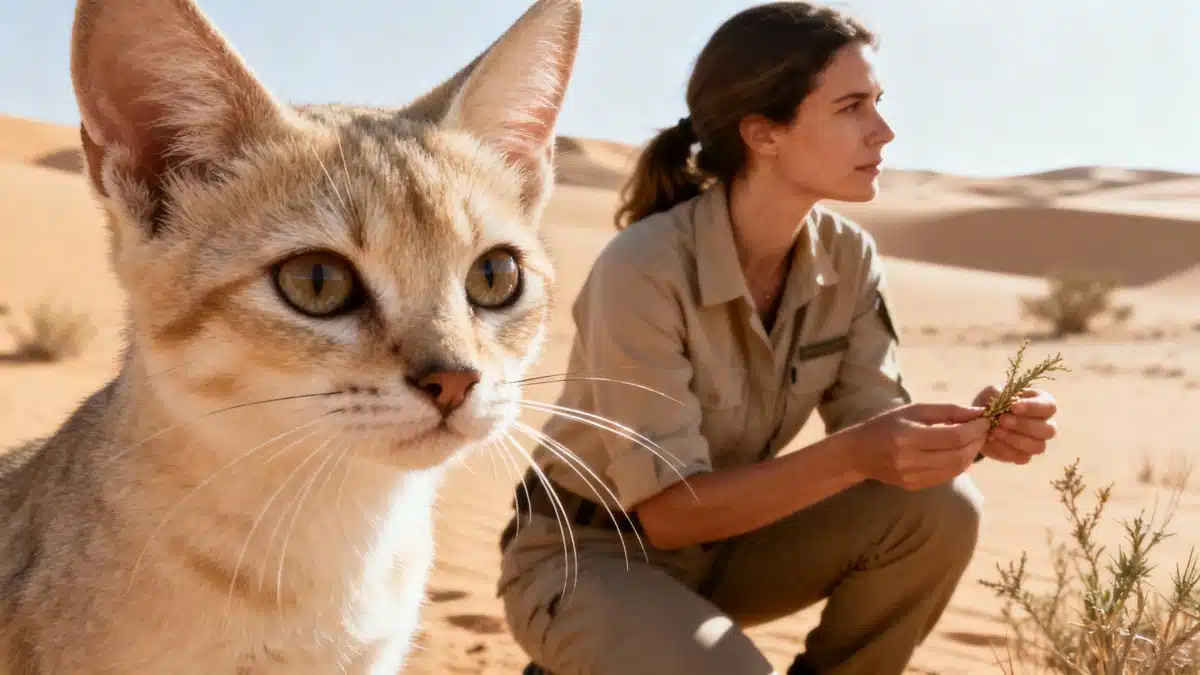
You may never have come face to face with the sand cat—unless you’re particularly fond of wandering sun-scorched deserts at odd hours—but this elusive little feline may just steal your heart! With a mix of irresistible charm, unique survival tricks, and the battle scars of modern threats, the sand cat’s quiet existence is far more captivating and precarious than its tiny paws suggest.
Mysterious Wanderer of the Wildest Sands
Spotting a sand cat in the wild? That’s like finding a needle in, well, a very sandy haystack. These enchanting cats are encountered only sporadically in a stretch of the globe that’s anything but cozy—think the endless Sahara in North Africa, the labyrinthine Middle East, the Arabian Peninsula, Turkmenistan, Kazakhstan, and the rugged expanse of Pakistan. Scorching days, chilly nights, and an utter lack of spa resorts: it’s safe to say sand cats are built of tougher stuff than your average housecat.
Small, Camouflaged, and Sharing with the Shy
What keeps a sand cat out of trouble? Well, size—and style! Their petite stature and specialized coloring help them blend seamlessly into their dry grassland homes, where convenient hideouts are few and predators are many. Unlike most feline cousins who stake out their territory with the fervor of a cat with a new cardboard box, sand cats are surprisingly laid-back. Males don’t mind a bit of neighborly sharing of the family burrow and have a generally calm demeanor. Still, they’re solitary wanderers at heart; females give birth alone, demonstrating an independent streak that would impress any introvert.
- Small size and sandy tones: natural camo experts
- Males tolerate sharing burrows
- Solitary lifestyles; females raise young alone
Nature’s Little Desert Tanks
If you’re imagining a delicate ball of fluff shivering in the sand, think again. Sand cats sport short legs, a relatively big head, and a broad nose—features that may not win cat shows, but they scream survival. Their most impressive accessory? Long fur covering their paw pads like tiny boots, acting as both insulation and heat shield, making walking on blazing desert sand as comfortable as a stroll through your living room (well, almost).
Their ears are another marvel: large, low-set, and tuned like a feline satellite dish. These ears pick up the ultrasonic chirps of rodents scurrying below, sounds completely inaudible to us mere humans. And as meticulous desert carnivores, sand cats dine primarily on small rodents such as gerbils, while happily snacking on birds, lizards, and invertebrates. Don’t worry about offering them a drink—sand cats are the ultimate self-hydraters, extracting all the water they need from their prey and quite content living far from the nearest oasis.
- Short legs, big head, broad nose
- Furry footpads for walking on hot sand
- Large, low-set ears for detecting rodent ultrasounds
- Carnivores, feeding mainly on desert rodents, birds, lizards, and invertebrates
- Get all needed water from their diet—no water bowl needed!
Unexpected Threats: A Cute Cat in Peril
As adorable as they may be, life is no walk in the park (or sand dune) for sand cats. Nature already stacks the odds with a line-up of predators: venomous snakes waiting under rock, keen-eyed birds of prey swooping from above, and the occasional wolf hoping a sand cat is on the menu. But the real plot twist comes with the arrival of their most formidable threat: humans.
Human activities are shrinking sand cat territory at an alarming rate. Grazing livestock doesn’t help, munching on the very vegetation that supports the small mammals sand cats depend on. And if that weren’t enough, domestic cats and dogs—ubiquitous, competitive, and sometimes sick—join the survival race, competing for food and transmitting diseases to their wild cousins. It’s a sand cat eat, well, not be eaten world out there, and the deck is stacked against these pint-sized predators.
- Threatened by venomous snakes, birds of prey, and wolves
- Biggest danger: habitat loss and competition from human expansion
- Livestock reduces food sources for their prey
- Domestic cats and dogs compete for food and spread diseases
In a world where even the toughest little wildcat can lose its place, getting to know the sand cat just might be the best excuse for caring a little more about the wild places—and the wild faces—we’re lucky to share our planet with. Next time you find sand in your shoes, just imagine the tiny, tenacious sand cat quietly padding the world’s deserts, a small wonder facing big challenges.
Le Monde des Animaux & de la Nature is devoted to bringing the beauty and drama of wild animals and plants to readers everywhere, inviting everyone on a visual safari into the heart of nature’s secrets.

John is a curious mind who loves to write about diverse topics. Passionate about sharing his thoughts and perspectives, he enjoys sparking conversations and encouraging discovery. For him, every subject is an invitation to discuss and learn.