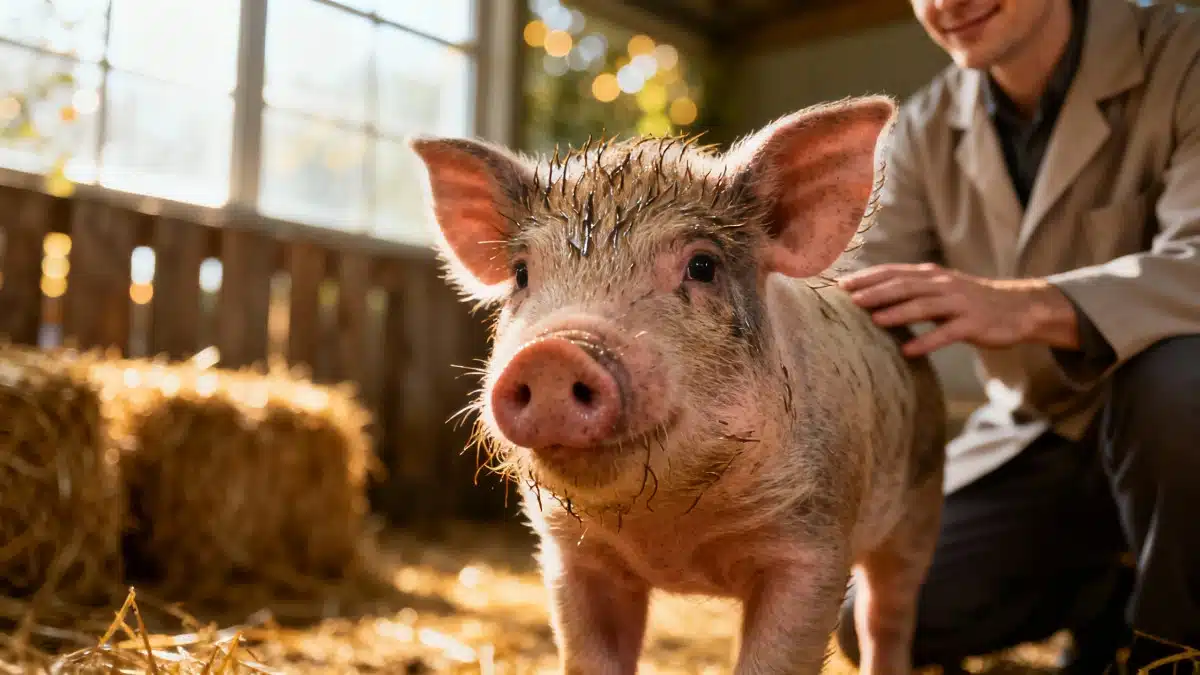
Ever tried to ignore a pig on a farm? Impossible. With their hefty silhouettes and, above all, their renowned cacophony, pigs are the true rock stars of barnyard noise. But what does a pig really sound like? And what’s hiding behind their famous snorts and squeals? Underneath what seems like a simple question lies a surprisingly rich world of animal language, cultural stories, and scientific discoveries.
A Soundtrack Beyond Oink: The Pig’s Vocal Range
- Pigs (Sus scrofa domesticus) are famous for grunting and squealing. Like cows that moo and horses that neigh, pigs have their vocal trademarks.
- Their sounds are guttural, deep, and, at times, rough. But don’t be fooled: a pig doesn’t limit itself to just two types of noises.
- The range varies from high-pitched calls to low growls. Researchers at INRAE have identified more than twenty distinctive pig vocalizations tied to emotions like fear, pain, contentment, food-seeking, and social play.
If you’ve ever claimed pigs are noisy, you’re not exaggerating. Their calls have been measured at a thunderous 115 decibels—on par with a rock concert. Not bad for a farm animal, right?
How Does a Pig Make Noise? (Hint: It’s Not Just « Oink »)
Many adults try to impersonate a pig using their pharynx (the back of your throat, for non-anatomy fans), usually resulting in amused giggles from children. But in truth, what’s happening inside a pig is far more complex and, frankly, impressive. Pigs have a larynx and vocal cords, much like other mammals. What sets them apart is the unique shape of their pharynx and the sheer power of their chest, giving their calls a grave, sometimes overwhelming resonance. So much for the cartoonish « oink »—the real pig symphony is richer and much less predictable!
Context and emotion change the tune. Negative emotions like fear or pain produce long, sometimes shrill cries or loud squeals. When pigs are comfortable or in everyday social situations, you’ll hear shorter grunts or even tiny barks, often paired with other body language: ears pointed forward, tails wagging or flicking.
Growling isn’t all bad, either! This sound pops up during positive moments such as food searching, social interaction, or keeping contact with the group. All these nuances reveal a true « sonic grammar »—pigs don’t just make noise; they communicate with surprising specificity.
More Than Just a Noisy Snout: The Intelligence Beneath
The pig’s vocal world mirrors its intelligence. It’s reductive to see pigs as nothing more than noisy stomachs with curious snouts. Science says otherwise: domestic pigs are remarkably clever. Studies show they can:
- Learn complex tasks and remember information
- Solve problems with their snouts
- Recognize themselves in mirrors
- Distinguish symbols
- Even master a joystick to move a cursor on a screen
This brainpower puts pigs in serious company alongside dogs—and even dolphins. In fact, researchers in 2022 developed an algorithm as part of the SOUNDWEL project to analyze 7,414 recordings from 411 pigs, mapping out how their calls relate to emotions and different stages of life, from birth to the, ahem, very end.
The idea is deceptively simple: by analyzing the pig’s voice, we can read their emotional state and health. Understanding pig cries isn’t just whimsical curiosity—it’s a practical tool for modern farming.
Pigs and People: From Barn to Living Room
On some experimental farms, sound sensors now continuously record pig noises. Analysis allows early detection of stress, respiratory illness, or feeding problems, turning « just a grunt » into a powerful indicator of animal welfare. This approach offers the hope of more respectful, attentive relationships with farm animals—where listening to their sound signals helps guide care.
But the pig’s value doesn’t stop there. Their vocal apparatus is close enough to humans to make them a fascinating research subject. Studying their breathing and vocal mechanics helps scientists hone their understanding of human vocal and respiratory disorders. Pig tissues even serve in studies testing experimental voice treatments or larynx transplants. The supposedly bothersome grunts of pigs could hold keys to improving human health.
Meanwhile, pigs show off their sharp minds in cognitive science as well. They memorize routes, recognize individuals, and can cooperate to achieve a goal—always riveting for researchers. Some experiments even reveal pigs can anticipate situations or display empathy, reacting to the stress of another pig. Their underestimated intelligence prompts us to reconsider the conditions they are given and their role in our world.
Not everyone sees the pig as just livestock, either. Some people welcome tiny pigs, such as the Vietnamese or Göttingen minipig, into their homes. Their intelligence and sociability make them charming companions capable of recognizing their names, learning simple tricks, and creating genuine bonds with their humans.
Be warned, though: even a mini pig needs space, mental challenges, and a special diet. But these adoptions highlight one essential truth—behind the sometimes thunderous grunts is a sensitive, communicative, and curious living being.
The next time you hear a pig raise its remarkable voice, remember: it’s not just noise. It’s an opera of emotion, smarts, and social life—far richer than any “oink” you could dream up.

John is a curious mind who loves to write about diverse topics. Passionate about sharing his thoughts and perspectives, he enjoys sparking conversations and encouraging discovery. For him, every subject is an invitation to discuss and learn.