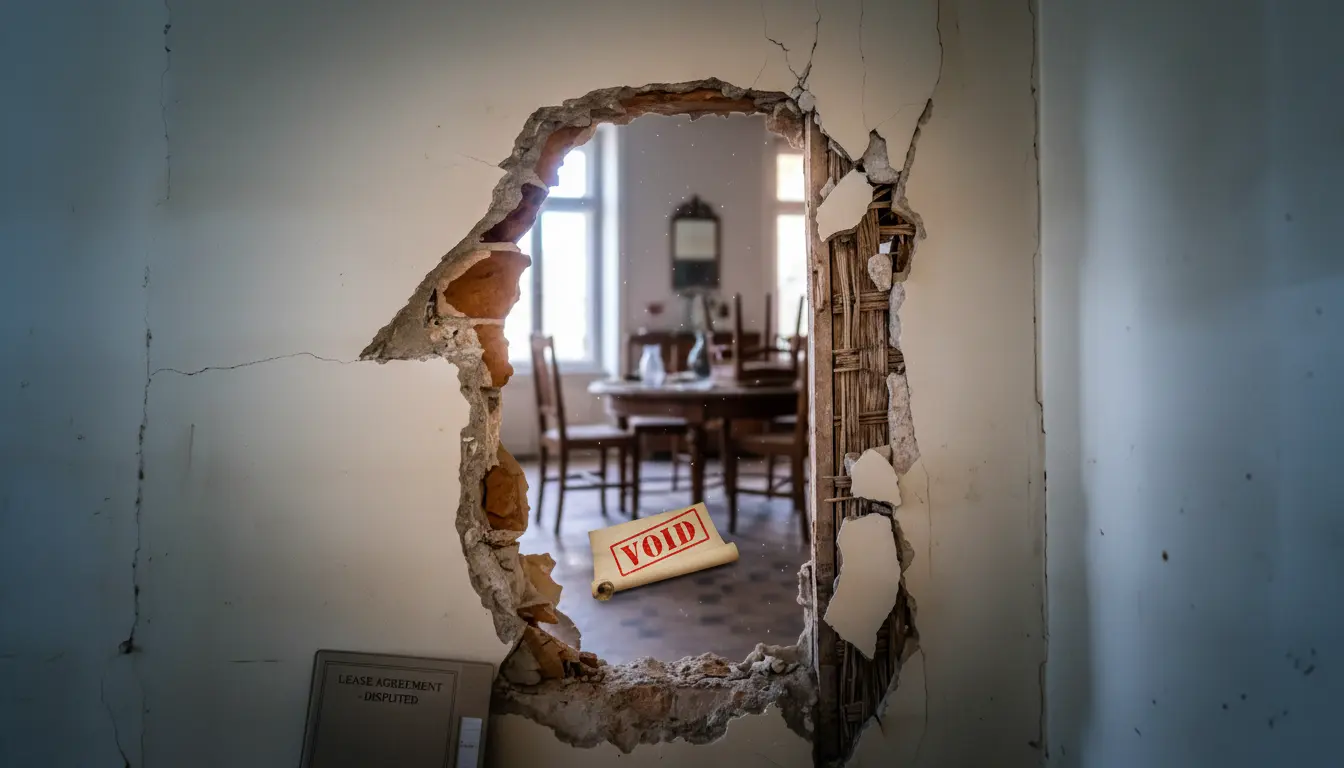
Picture the scene: your tenant is handing back the keys, you’re itching to check the state of the place, and you know you spotted a few weeds taller than the mailbox in the garden. But before you grab your gardening bill pad, beware! Without meticulous paperwork and following legal procedures to the letter, landlords can kiss their claims—and that beloved deposit—goodbye.
The Importance of a Proper Exit Inspection
When a tenancy draws to a close, it’s not just a casual farewell. The official handover of keys always comes with an exit inspection report. This document is much more than red tape: it lets landlord and tenant precisely compare the property’s condition at move-in and move-out. Should any dispute arise, this report is the golden ticket for proving any damage. However, if it’s not drafted jointly and transparently—the legal term is « contradictory »—any reimbursement claims the owner might have become legally shaky, often ending in the tenant’s favor.
Joint Procedure: No Room for Shortcuts
The law is crystal clear: the exit inspection must be completed with the tenant and landlord (or their representatives) both present. If the tenant wasn’t officially summoned, or if the landlord carried out the inspection solo, the legal value of the document crumbles like old plaster. Should a disagreement break out, the entire burden of proof falls squarely on the landlord—no easy feat!
- Formal invitation to the inspection is required (think registered post, not a WhatsApp message!).
- If the tenant can’t or won’t attend, an official bailiff (a justice commissioner) must step in.
- Unilateral inspections—even by a landlord’s representative—have zero weight in court.
The Case That Changed Everything (or Confirmed Everything… with a Bang)
Let’s get down to the recent judgment causing landlords everywhere to double-check their paperwork. In this matter, a landlord’s representative prepared the exit report alone. The landlord then claimed garden neglect and demanded restoration costs from the tenant. There was just one snag: no evidence of a formal invitation to the tenant, and no request for a justice commissioner. As a result, the court invalidated the exit report.
The top court (Cour de cassation) reaffirmed: without a formal invitation (sent by registered mail) or a justice official present when needed, a unilaterally drafted report isn’t even worth the paper it’s written on. The punchline? The landlord had to return a full 1,539.60 euros—the entire security deposit plus late penalties—to the tenant. This verdict is a sharp reminder: skipping a step in the legal dance can be financially painful.
Concrete Consequences and Universal Lessons
This legal slap on the wrist isn’t limited to upscale rentals; it applies everywhere, including public housing. Proper property care and regular maintenance are essential; their absence can even justify eviction. But lately, landlords have struggled to get compensation for damages, even when squatters have trashed the place—provided procedure wasn’t airtight.
Miss a single step, and it’s the landlord footing the whole repair bill, real damage or not. Every shortcut or oversight comes with an immediate price tag when tallying the deposit refund. Strict adherence to procedure isn’t just best practice—it’s financial self-defense.
- In the spotlighted case, the tenant received the full deposit—1,539.60 euros—plus late penalties.
- Legal protection for tenants is robust when procedure is skipped or the condition report is missing or invalid.
- Landlord faces a double whammy: no compensation for repairs and full refund with penalties. Transparency and fairness between landlord and tenant are the direct result.
- Complete, transparent records are the only way landlords can prove a tenant’s liability and justify withholding any security deposit.
The 16 November 2023 judgment reinforced a fundamental rule: without proof established fully in line with the law, no security deposit sum can be withheld. Formality isn’t just about paperwork—it actively protects tenants and demands landlords honor rental law standards.
- Solo inspection reports, even by agents, never suffice to lay blame or claim compensation.
- Only a thorough, jointly-conducted process lets landlords justify billing repairs post-move-out.
The Takeaway: Meticulous Process Is Your Best Friend
Vigilance and strict administrative steps are the landlord’s only shield against costly legal headaches when a tenancy ends. Dot every « i, » cross every « t »—and maybe take a photo or two of that jungle out back. After all, in tenancy law, the devil is absolutely in the details.

John is a curious mind who loves to write about diverse topics. Passionate about sharing his thoughts and perspectives, he enjoys sparking conversations and encouraging discovery. For him, every subject is an invitation to discuss and learn.